Extraits botaniques
Green Tea Extract / Tea Polyphenols
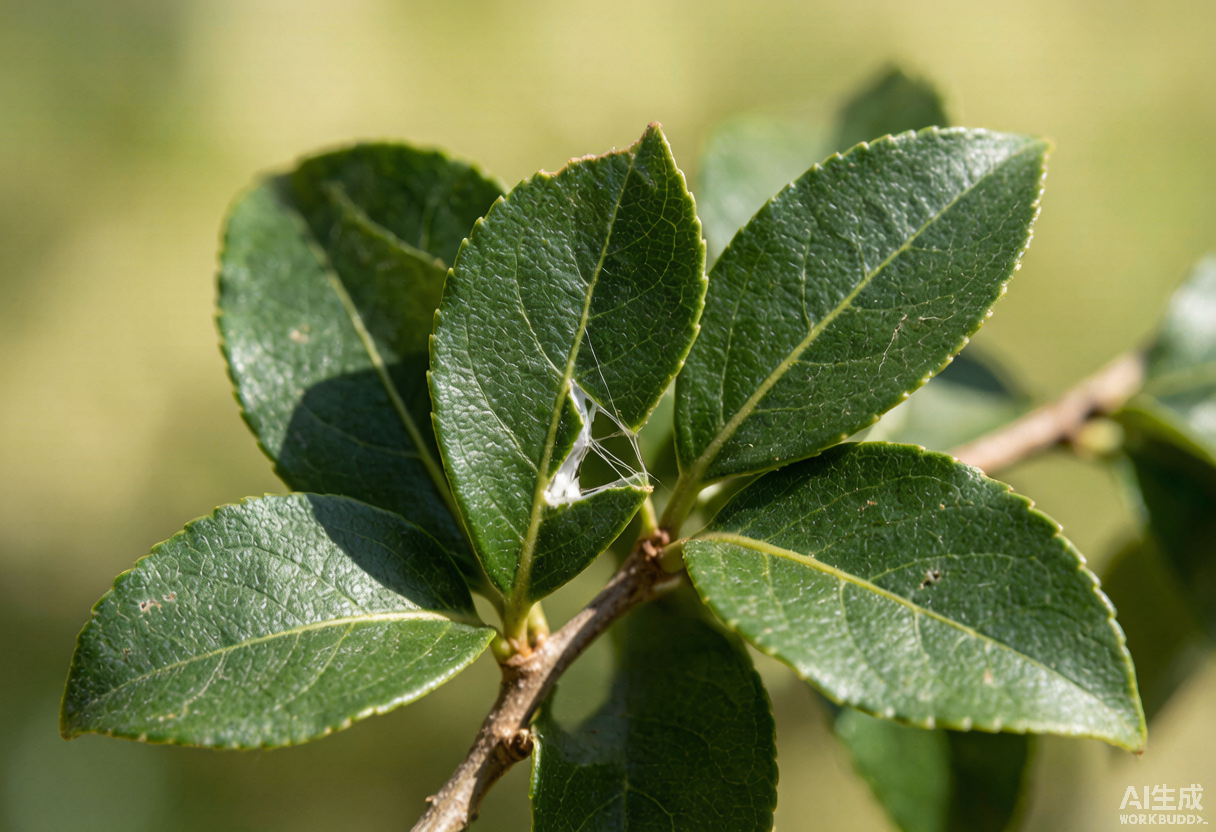
Camellia sinensis (L.) O. Kuntze leaf
Pourquoi HerbalSourcing
Buy verified green tea extract — not commodity blend
Spécification technique
Fiche de spécification complète
16 champs de données au standard de référence — la transparence technique que les concurrents n'offrent pas.
| Nom du produit | Green Tea Extract / Tea Polyphenols |
|---|---|
| Nom botanique | Camellia sinensis (L.) O. Kuntze leaf |
| Famille botanique | Theaceae |
| Partie utilisée | Leaf (young flush, one bud and two leaves preferred) |
| Principe actif | Tea Polyphenols / EGCG |
| Dosage / HPLC | Tea Polyphenols 98% / EGCG 50%; TP 60% / EGCG 30%; TP 50% instant |
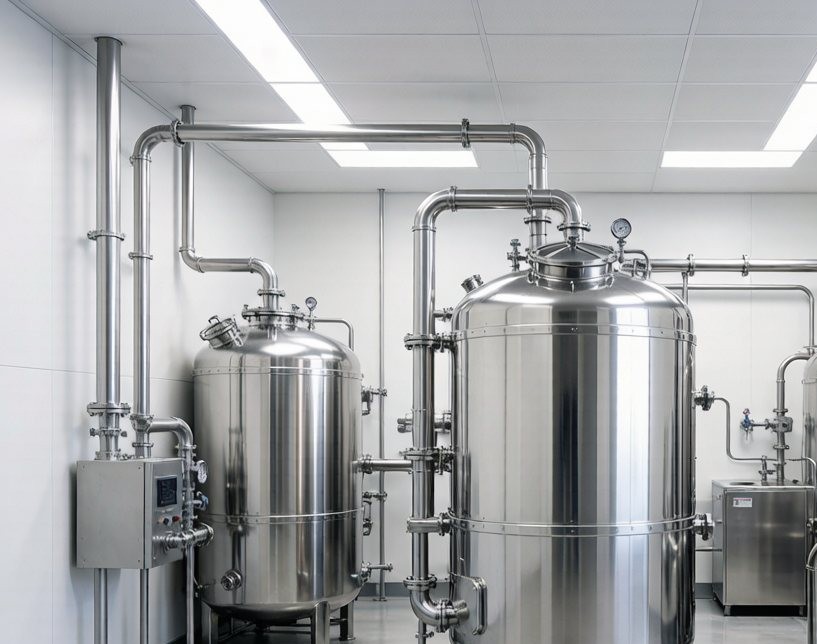
| Méthode d'extraction | Aqueous ethanol extraction of Camellia sinensis leaf, membrane filtration, concentration and spray drying |
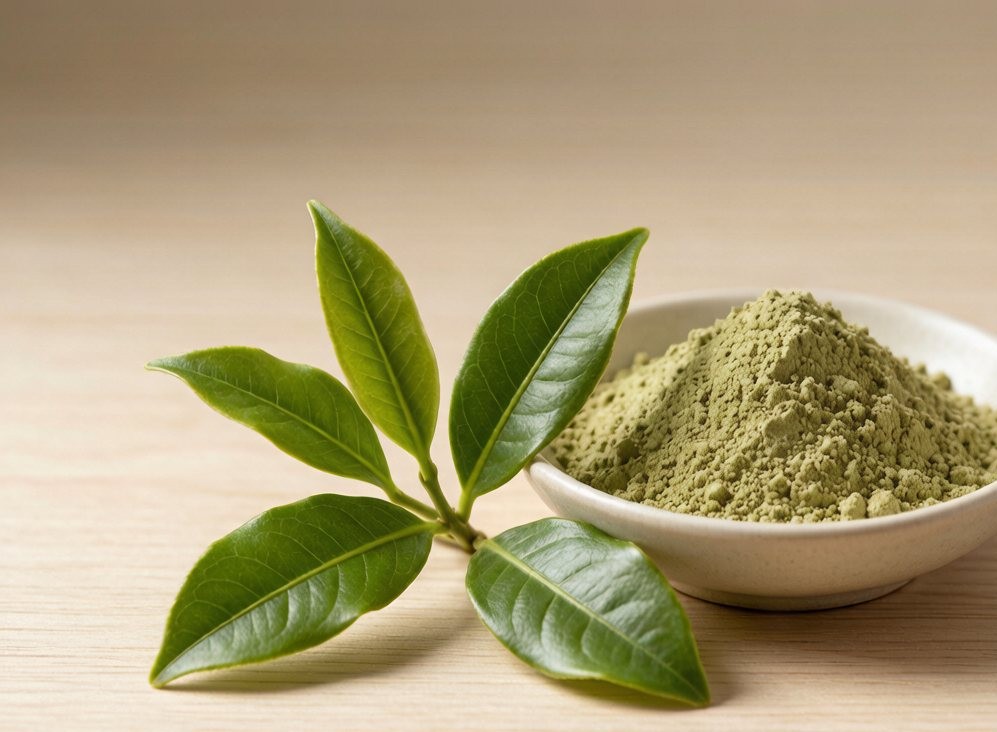
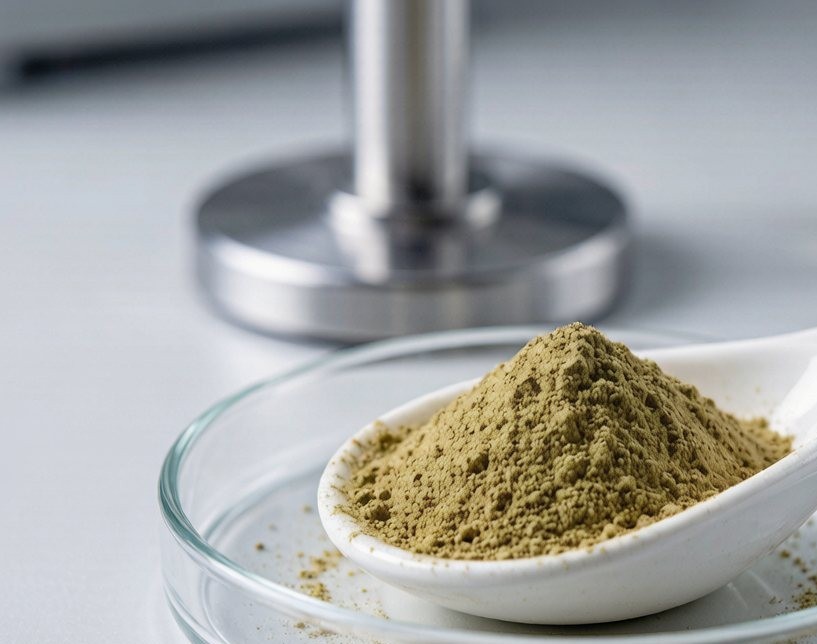
| Aspect | Fine green to tan-brown powder; characteristic tea aroma; instant grades form clear to light-green dispersions |
| Solubilité | Partially soluble in water; freely soluble in aqueous ethanol; instant grades fully water-dispersible |
| Usage recommandé | Capsules/tablets 200-500 mg per serving; beverages 50-200 mg/serving; cosmetics 0.5-2%; confirm by market and formulation |
| Origine | Zhejiang, Guizhou and Sichuan tea regions, China |
| Certifications | ISO 9001 document support, HACCP / GMP document review, Halal / Kosher document review, Batch-specific COA, Food-grade production route |
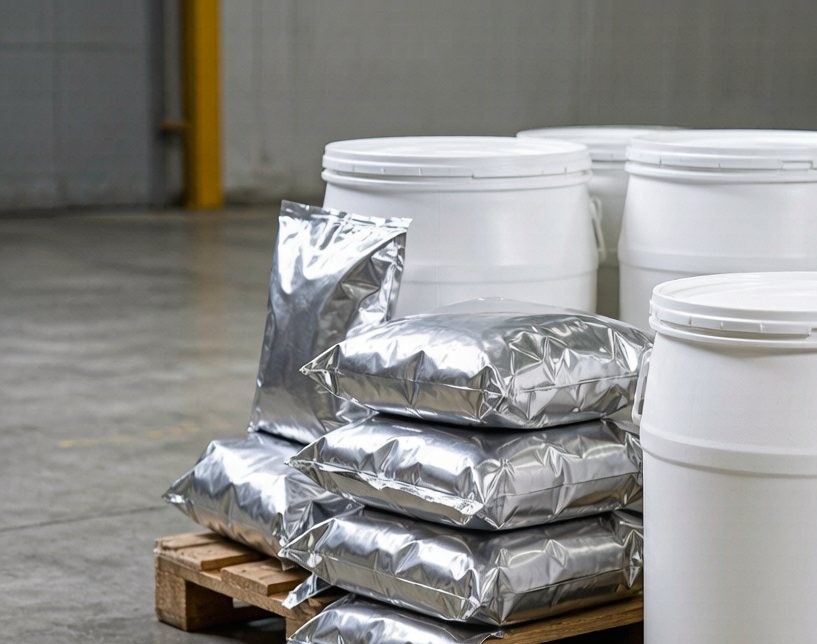
| MOQ / Conditionnement | 100 g sample / 5 kg pilot / 25 kg bulk |
| Délai de livraison | 7-20 days |
| Stabilité / Stockage | 24 months when sealed, cool, dry and protected from light; EGCG oxidizes under alkaline and high-humidity conditions |
| Applications | Nutraceutical / functional food / solid beverage / antioxidant / cosmetic ingredient / oral care |
Prix et MOQ
Tarification par palier — de l'échantillon au vrac
Prix de référence FOB Chine transparents. Un devis formel nécessite la confirmation du grade, du lot et du stock.
Uniquement pour un pack d'échantillon ou une présélection RFQ. Un devis formel nécessite la confirmation du grade, du lot et du stock.
Demander un échantillon →Devis établi après confirmation de la méthode de dosage, du périmètre du COA, du conditionnement, du délai et de l'adéquation à l'application.
Demander un devis pilote →Selon le dosage, le MOQ, le stock, l'emballage, les marques d'expédition, l'incoterm et le marché de destination.
Demander un devis en vrac →Spécifications disponibles
| Spécification | SKU | Méthode de dosage | Prix de référence | Conditionnement |
|---|---|---|---|---|
| Tea Polyphenols 98% / EGCG 50% | HS-BE-GTE-98-EGCG50 | Tea polyphenols by UV; EGCG by HPLC | FOB USD 26-34 / kg | 1 kg / foil bag or 25 kg / drum |
| Tea Polyphenols 60% / EGCG 30% | HS-BE-GTE-60-EGCG30 | Tea polyphenols by UV; EGCG by HPLC | FOB USD 18-25 / kg | 1 kg / foil bag or 25 kg / drum |
| Tea Polyphenols 50% — Instant / water-soluble | HS-BE-GTE-50-INSTANT | Tea polyphenols by UV | FOB USD 12-18 / kg | 1 kg / foil bag or 25 kg / drum |
Étape suivante
Comment procéder avec Green Tea Extract / Tea Polyphenols
Choisissez le parcours correspondant à votre étape d'achat. Chaque voie aboutit à la même équipe d'approvisionnement, vous obtenez donc une réponse ciblée.
Demander un échantillon
Validez la qualité, l'aspect et la solubilité avant de vous engager. Les échantillons sont expédiés avec un COA de lot.
Demander un échantillonDemander un devis en vrac
Obtenez le MOQ, le délai, les prix de référence FOB et l'assistance documentaire à l'export pour votre marché de destination.
Demander un devisObtenir les documents techniques
COA, SDS, TDS et chromatogramme HPLC. Indiquez-nous le lot ou la spécification dont vous avez besoin.
Demander les documentsDocuments
Télécharger les documents techniques
COA, SDS, TDS et chromatogramme HPLC disponibles pour chaque produit. Demandez les documents spécifiques au lot via un RFQ.
Applications
Où cet ingrédient trouve sa place
À utiliser lorsque… — des recommandations de formulation concrètes pour chaque application en aval.
Antioxidant supplement formulas
Supplement brands and capsule/tablet manufacturers
Use TP98/EGCG50 or TP60/EGCG30 when the formula needs a high-marker green tea active with COA and HPLC support.
Functional beverage and solid drink powder
Functional food, beverage powder and sachet teams
Use TP50 instant when price, solubility, color, taste and dispersibility matter more than an EGCG-led claim.
Oral-care and cosmetic antioxidant
Cosmetic, oral-care and personal-care raw material buyers
Use tea polyphenol grades as botanical antioxidant inputs where final application and compliance route must be reviewed.
Weight-management and metabolic support
Sports nutrition and weight-management brands
Use EGCG-led grades in thermogenic and metabolic-support blends at clinically relevant serving sizes.
Guide des spécifications
Quelle spécification pour votre application
Associez votre application cible et forme galénique au bon grade — puis demandez un échantillon ou un devis.
| Application | Forme | Grade recommandé | Pourquoi ce grade |
|---|---|---|---|
| Premium antioxidant capsules & tablets | powder / granule | Tea Polyphenols 98% / EGCG 50% | High-marker EGCG grade; verify EGCG by HPLC, not only UV total polyphenols. |
| Functional foods & mid-market supplements | powder / granule | Tea Polyphenols 60% / EGCG 30% | Balanced marker strength and FOB cost; confirm caffeine band for the target market. |
| Functional beverages & solid drinks | instant / water-soluble | Tea Polyphenols 50% Instant | Water-dispersible beverage grade; solubility, color and taste are critical before beverage use. |
| Dual-market EU / US SKUs | powder | TP98/EGCG50 with full documentation | Request pesticide panel vs EU/US positive lists, heavy metals to EU 2023/915 and Halal/Kosher routing by RFQ. |
Cas acheteur réel
Comment les acheteurs se procurent réellement
Un exemple anonymisé basé sur de vraies demandes — sans noms, sans chiffres inventés.
Une marque nord-americaine formulant une gelule riche en EGCG avait ete trompee par un fournisseur precedent dont le lot de polyphenols du the etiquete 98 % ne donnait que 71 % d'EGCG a sa propre HPLC et presentait des residus de pesticides detectables. Avant le relancement, ils avaient besoin d'une specification fiable, verrouillee par lot.
Scenario representatif d'acheteur base sur les exigences courantes de qualification pour l'extrait de the vert a haute teneur en EGCG.
Base de connaissances produit
Everything buyers need to know about green tea extract
Une profondeur technique qui permet aux formulateurs et aux équipes achats de choisir en confiance.
Qu'est-ce que l'extrait de thé vert / les polyphénols du thé ?
L'extrait de thé vert est une préparation concentrée obtenue à partir des feuilles de Camellia sinensis, la plante du thé. Le groupe bioactif clé est celui des polyphénols du thé — une famille de catéchines comprenant l'épigallocatéchine gallate (EGCG), l'épicatéchine (EC), l'épigallocatéchine (EGC) et l'épicatéchine gallate (ECG). Les extraits standardisés déclarent généralement 50-98 % de polyphénols du thé par UV et 30-50 % d'EGCG par HPLC. Contrairement à une simple poudre de thé, un extrait délivre une dose constante et mesurable de ces actifs, c'est pourquoi les formulateurs de compléments, boissons et cosmétiques le préfèrent à la feuille broyée.
L'EGCG et le complexe polyphénolique — pourquoi les marqueurs comptent
L'EGCG est la catéchine la plus étudiée et le marqueur habituel des extraits de thé vert premium. Le profil polyphénolique est toutefois plus large : un grade « polyphénols du thé 98 % / EGCG 50 % » signifie 98 % de polyphénols totaux et environ 50 % d'EGCG. Certains fournisseurs gonflent le chiffre des polyphénols en incluant des composés non-catéchines ; les acheteurs professionnels vérifient donc aussi par HPLC. Nous déclarons à la fois l'UV (polyphénols totaux) et la HPLC (EGCG) pour que vous puissiez comparer la constance entre lots et vérifier que le chiffre élevé de polyphénols est bien adossé à une teneur réelle en catéchines.
Comment l'extrait de thé vert est-il produit ?
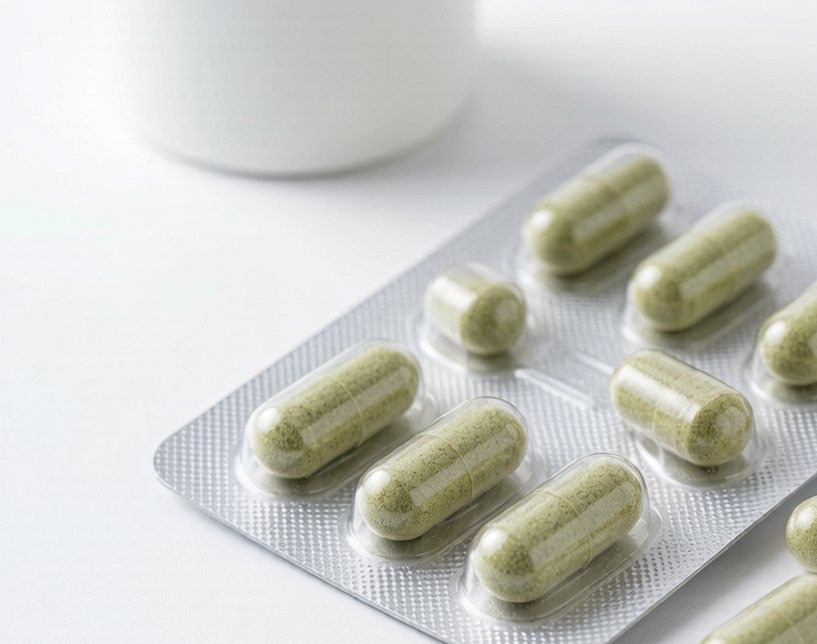
La production commence par de jeunes feuilles de thé fraîchement cueillies. Après une rapide fixation à la chaleur (torréfaction ou étuvage) pour inactiver la polyphénol oxydase et préserver les catéchines vertes, les feuilles sont séchées puis envoyées à l'extraction. L'extrait industriel utilise de l'éthanol aqueux, suivi d'une filtration sur membrane, d'une concentration et d'un séchage par atomisation pour obtenir une poudre fine. Les grades à plus forte teneur en EGCG peuvent inclure une purification supplémentaire. Le résultat est une poudre stable et standardisée à teneur connue en polyphénols et EGCG, prête pour les gélules, les prémix de boissons ou les actifs cosmétiques.
Applications dans les compléments, l'alimentaire et la cosmétique
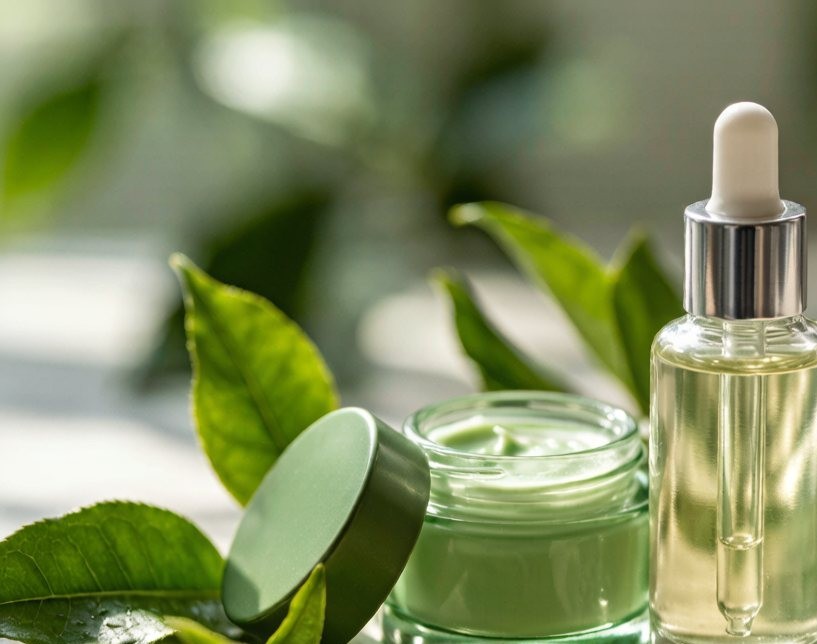
La polyvalence de l'extrait de thé vert tient à ses propriétés antioxydantes, métaboliques et antimicrobiennes. Dans les compléments, il entre dans les formules antioxydantes, de gestion du poids et de soutien métabolique, généralement dosé à 200-500 mg par portion. Dans les aliments fonctionnels et boissons, il apporte une allégation antioxydante et une note de thé subtile ; les grades instantanés sont conçus pour les sachets et les boissons prêtes à boire. En cosmétique et soins bucco-dentaires, les polyphénols offrent des bénéfices antioxydants, apaisants et sébo-régulateurs dans les sérums, crèmes, masques et dentifrices. Chaque application exige des spécifications différentes : les compléments ont besoin de la confirmation de l'EGCG, les boissons de solubilité et de goût, la cosmétique de stabilité de couleur et de faible odeur.
Mécanisme antioxydant et notes de positionnement
Les polyphénols du thé vert, surtout l'EGCG, sont de puissants antioxydants qui piègent les radicaux libres et modulent les voies de signalisation cellulaire. Cela sous-tend l'utilisation de l'ingrédient dans les produits anti-âge, de soutien immunitaire et de santé métabolique. Les formulateurs doivent noter que l'EGCG est relativement instable à pH élevé et en présence d'oxygène et d'ions métalliques : le pH, le conditionnement et le stockage de la formule comptent donc. Les allégations de santé doivent suivre la réglementation du marché de destination — par exemple, l'EFSA impose des règles strictes sur les allégations relatives aux catéchines du thé vert et des avertissements d'hépatotoxicité pour les compléments à forte dose dans l'UE.
Qualité, conformité et points à confirmer avant exportation
Avant d'exporter, confirmez que le grade correspond à l'application : qualité alimentaire, complément ou cosmétique. Vérifiez la teneur en caféine (et si une version décaféinée est nécessaire), les résidus de pesticides par rapport aux listes positives UE/États-Unis/Japon, les métaux lourds, les HAP, les solvants résiduels et la microbiologie. Les certifications Halal, Kasher et bio doivent être examinées selon le marché de l'acheteur. Les acheteurs américains de compléments exigent généralement une documentation cGMP et d'établissement FDA ; les acheteurs de l'UE, une conformité aux règles sur les compléments alimentaires et les novel foods. Nous préparons le dossier documentaire par destination et l'examinons lors du RFQ, avec COA par lot et chromatogrammes HPLC sur demande.
Qualité et Conformité
Archive des COA au niveau du lot
Chaque lot est documenté. Consultez l'historique des lots pour vérifier la constance de la qualité avant de vous engager dans un RFQ.
| Numéro de lot | Date de production | Résultat de dosage | Statut | Action |
|---|---|---|---|---|
| HS-EGCG50-2406 | 2024-06 | Tea Polyphenols 98% / EGCG 50% | Conforme | Demander le COA → |
| HS-EGCG50-2403 | 2024-03 | Tea Polyphenols 98% / EGCG 50% | Archivé | Demander le COA → |
| HS-EGCG50-2312 | 2023-12 | Tea Polyphenols 98% / EGCG 50% | Archivé | Demander le COA → |
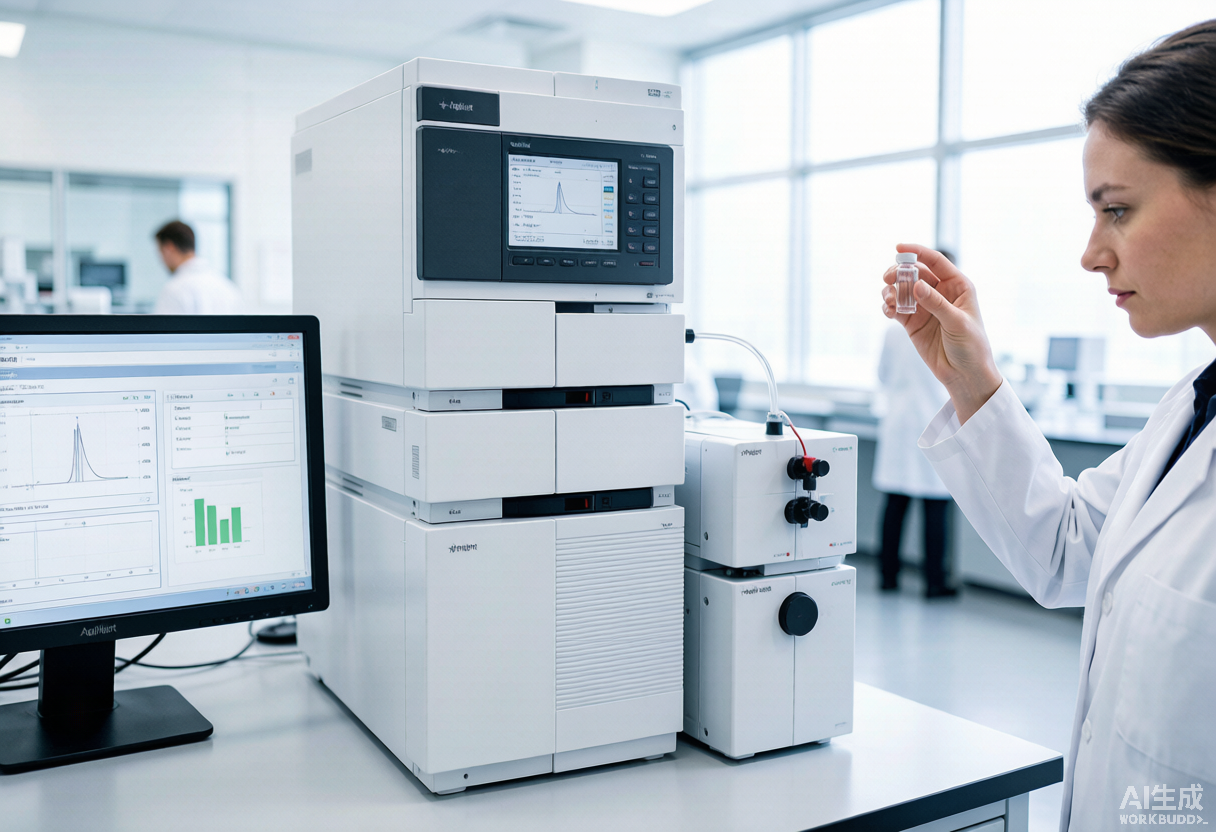
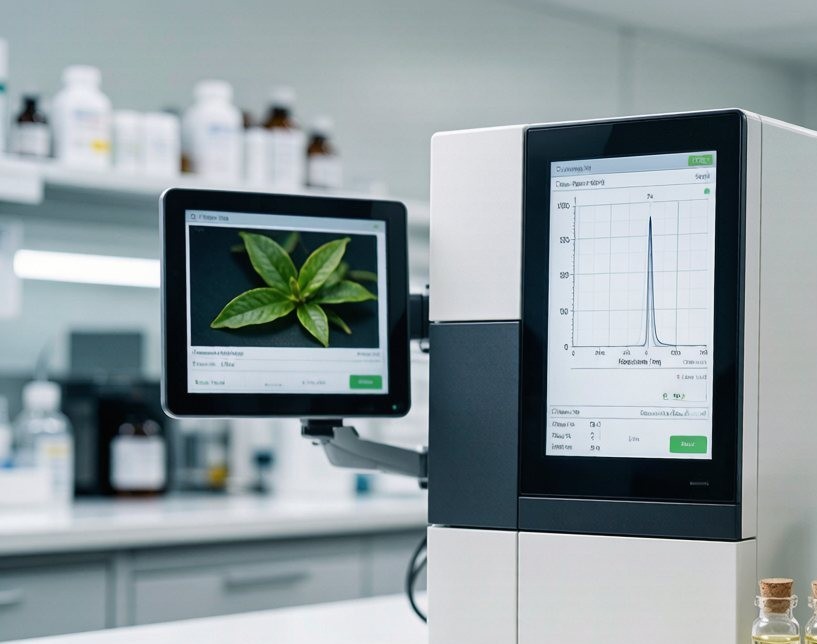
Chromatogramme HPLC — identification du marqueur actif
Analyse chromatographique de Tea Polyphenols / EGCG dans notre laboratoire de contrôle qualité. Le chromatogramme spécifique au lot et le rapport HPLC complet sont délivrés avec chaque COA.
Axes de contrôle
Polyphenols du the par UV
EGCG par HPLC pour les qualites a marqueur
Teneur en cafeine et statut de decafeination
Residus de pesticides (listes positives UE / US / Japon)
Metaux lourds : Pb, Cd, As, Hg
Microbiologie : decompte total, levures/moisissures, E. coli, Salmonella
Solvant residual, HAP et humidite
Notes documentaires
COA et methode de dosage verifies avant devis
MSDS, TDS et chromatogramme HPLC prepares pour revue acheteur
Documents Halal / Casher et de qualite alimentaire revus selon le marche acheteur
Photo finale du lot et etiquette confirmees apres validation de la quantite
Histoire d'origine
De la récolte à votre formulation
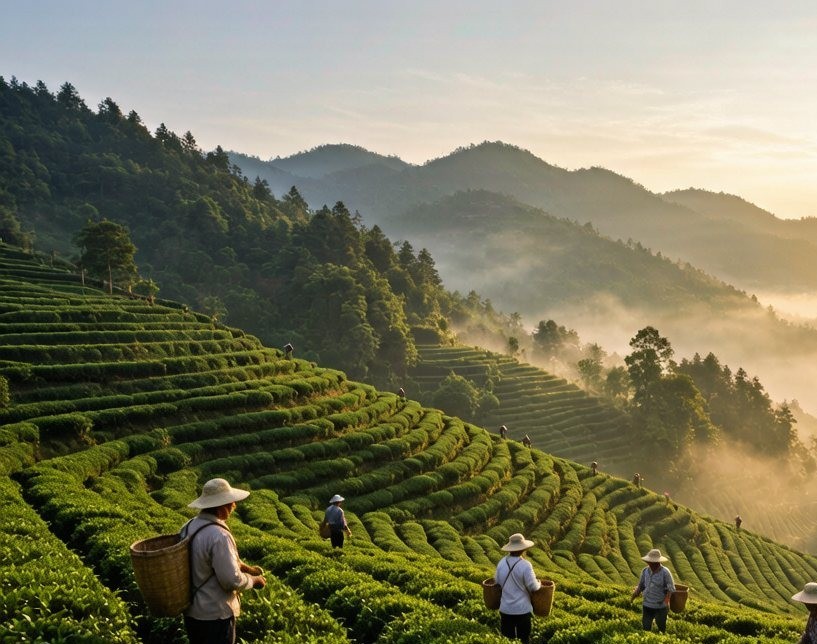
Zhejiang, Guizhou and Sichuan tea regions, China
Origine vérifiée GreenSource™
Green Tea Extract / Tea Polyphenols est approvisionné depuis Zhejiang, Guizhou and Sichuan tea regions, China. Notre programme GreenSource™ garantit que chaque lot est traçable jusqu'à sa région de récolte, analysé par HPLC pour confirmer le marqueur actif, et sourcé auprès de coopératives équitables qui soutiennent les communautés agricoles locales.
Galerie
De la plantation au produit
FAQ technique
Questions techniques fréquentes
Quelle est la solubilité de Green Tea Extract / Tea Polyphenols ?
Comment le marqueur actif est-il vérifié ?
Quelle est la quantité minimale de commande ?
Quels documents sont disponibles ?
Quelle est la durée de conservation et la recommandation de stockage ?
Quelle est la difference entre TP98/EGCG50 et TP60/EGCG30 ?
Le taux d'EGCG est-il verifie par HPLC ?
Proposez-vous des grades decafeines ou faibles en cafeine ?
Quels documents accompagnent le lot ?
Prêt à vous Approvisionner ?
Prêt à vous approvisionner en Green Tea Extract / Tea Polyphenols ?
Recevez sous 24 heures un devis documenté avec COA au niveau du lot, données HPLC et documentation d'exportation.